

Finding a breast lump can naturally cause concern, but a lump does not automatically mean breast cancer. Many breast lumps are benign and may be related to hormonal changes, cysts, fibroadenomas, infections, or other non-cancerous conditions. However, because it is not possible to reliably identify the cause simply by how a lump feels, a new or unusual breast lump should be medically evaluated.
A breast lump in women may be painless or tender, remain unchanged or vary with the menstrual cycle. Understanding the possible causes and knowing which changes deserve medical attention can help you take the right next step without unnecessary panic.
What Is a Breast Lump And How Common Is It?
A breast lump is an area of breast tissue that feels different from the surrounding tissue. It may feel firm, soft, smooth, irregular, tender or painless, depending on the cause. In women, lumps may develop due to hormonal changes, cysts, fibroadenomas, infections or other breast conditions. Many are non-cancerous, but a new or unusual lump should still be evaluated to understand what is causing it.
Men can also develop breast lumps because they have breast tissue too. Regardless of gender, any new lump, persistent swelling, nipple change, or other unusual breast symptom should be assessed by a qualified doctor. An examination, followed by imaging or other tests when needed, helps determine whether the change is benign or requires further investigation.
What Can Cause a Breast Lump in Women?
There are several possible causes of breast lumps, and many are non-cancerous. Common causes include:
| Possible Cause | What It May Involve |
| Breast cyst | A fluid-filled sac that may feel tender and can sometimes change with the menstrual cycle. |
| Fibroadenoma | A benign solid lump that is often smooth, firm or rubbery and may move under the skin. |
| Fibrocystic changes | Hormone-related changes that can make the breasts feel lumpy, tender or fuller, particularly around periods. |
| Mastitis or abscess | Inflammation or infection that may cause a painful lump in the breast, often with warmth, redness, or swelling. |
| Fat necrosis | A benign lump that can develop following an injury or previous breast surgery. |
| Intraductal papilloma | A benign growth within a milk duct that may sometimes cause nipple discharge. |
| Breast cancer | A breast lump can be a sign of cancer, although most breast lumps are benign. |
What Does a Painful Lump in the Breast Usually Indicate?
A painful lump in the breast is not always linked to cancer. Pain and tenderness are more commonly associated with conditions such as breast cysts, hormonal changes, inflammation, or infection. At the same time, pain alone cannot determine whether a lump is benign or concerning. Any new, persistent, or changing breast lump should be assessed properly rather than judged only by whether it is painful.
What are the Initial Steps After Discovering a Breast Lump?
Once you notice a breast lump, the focus should be on getting it assessed rather than trying to identify the cause yourself. A few simple steps can help make the consultation more useful.
1. Note Any Related Changes
Pay attention to when you first noticed the lump and whether there are other changes such as breast pain, nipple discharge, redness, swelling or skin changes. You can also note whether the lump seems to change around your menstrual cycle. Avoid repeatedly pressing or checking it, as this will not help determine what the lump is.
2. Get a Clinical Breast Examination
A doctor may ask about your symptoms, menstrual and medical history, previous breast problems, and relevant family history before examining the breast and underarm area.
Which medical professionals specialize in evaluating breast lumps? Depending on the situation, evaluation may involve a gynaecologist, breast specialist or a general surgeon with experience in breast conditions. If the breast lump needs surgical assessment or treatment, a surgeon may be involved in deciding the appropriate next step.
3. Understand Whether Further Tests Are Needed
Not every lump requires the same investigation. Based on factors such as your age, examination findings and the characteristics of the lump, the doctor may recommend an ultrasound, mammogram or, in selected cases, a biopsy.
These tests help establish the nature of the breast lump and whether it needs monitoring, further investigation or treatment. Finding a lump does not automatically mean surgery will be required; the next step depends on the diagnosis and individual clinical findings.
Signs that a breast lump needs immediate medical attention
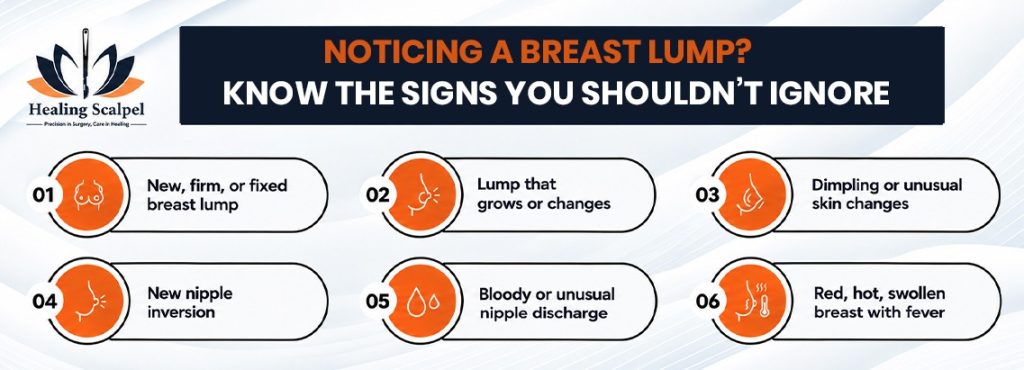
Any new breast lump deserves medical evaluation. You should seek prompt assessment, particularly when you notice:
- A new lump that feels firm or fixed
- A lump that persists, grows, or changes
- Dimpling, puckering, or other unusual breast skin changes
- New nipple inversion
- Bloody or unusual nipple discharge
- A new or enlarging lump in the armpit
- A noticeable change in breast shape or size
A painful lump in the breast accompanied by redness, warmth, swelling, fever, or feeling unwell also warrants timely medical attention because these symptoms can occur with breast infection or an abscess.
Do not wait for a lump to become painful before seeking an assessment. Likewise, a smooth or movable lump should not automatically be assumed to be harmless. How a lump feels can provide clues, but examination and, when necessary, imaging or tissue testing are what help establish the diagnosis.
Conclusion
A breast lump can have many causes, and most are not cancerous. Still, any new or persistent breast lump deserves proper evaluation so its cause can be identified and the appropriate next step decided.
If you notice a breast lump, persistent breast changes, or symptoms that concern you, a qualified clinician can assess whether further investigation is needed. Dr. Digvijay Singh at Healing Scalpel provides care in Breast & Endocrine Surgery as part of his General & Minimal Access Surgery practice in Gurugram, making this a contextually relevant area for professional surgical evaluation when required.

FAQs
1. What are the initial steps after discovering a breast lump?
Note any related changes such as pain, nipple discharge, redness or skin changes, and arrange a clinical assessment. Further tests may be advised depending on the examination.
2. Which medical professionals specialize in evaluating breast lumps?
A breast lump may be evaluated by a gynaecologist, breast specialist or general surgeon with relevant experience in breast conditions.
3. Signs that a breast lump needs immediate medical attention
Seek prompt medical evaluation if the lump is growing, hard or fixed, or is associated with skin dimpling, nipple changes, unusual discharge, redness, swelling or fever.
4. What are the recommended follow-up appointments after a benign breast lump diagnosis?
Follow-up depends on the type of benign lump, symptoms, and imaging findings. Some cases may only need observation, while others may require repeat imaging or clinical review.
5. What questions should I ask my doctor about a newly discovered breast lump?
Ask what the lump may represent, whether imaging or biopsy is needed, what changes to watch for, and whether follow-up or treatment is recommended.