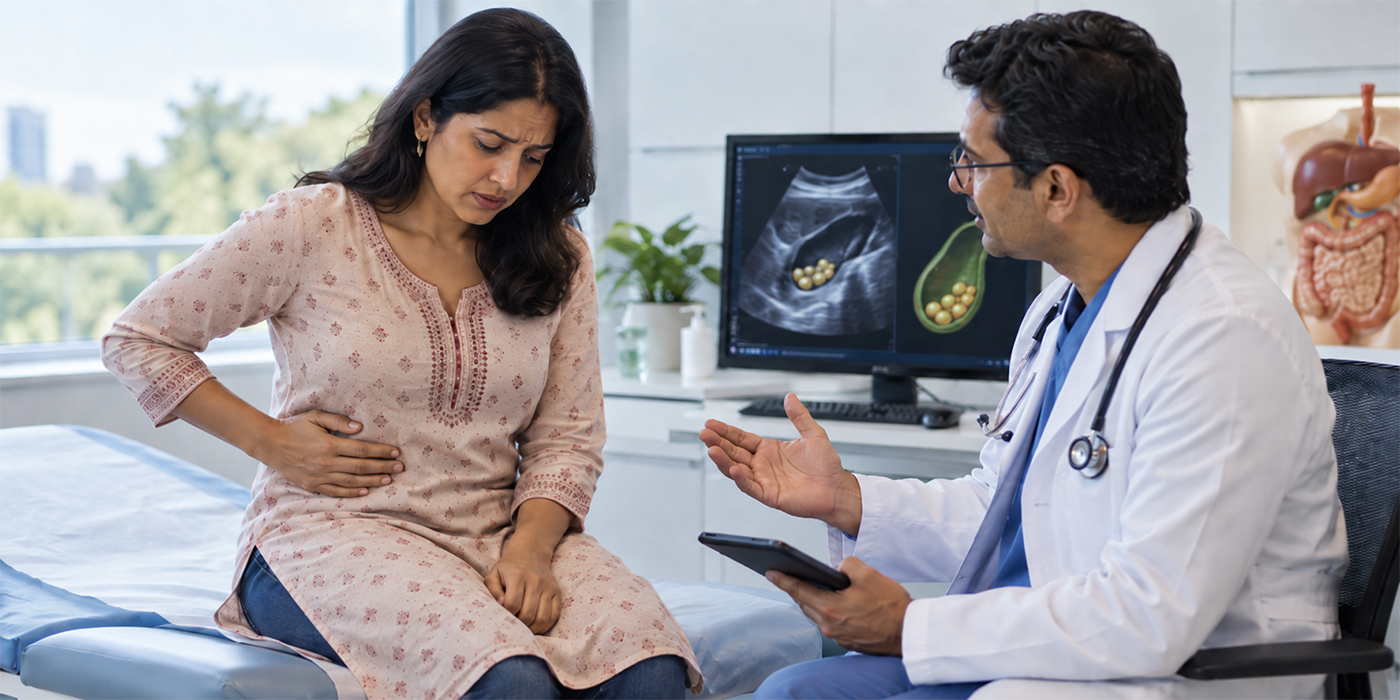
A sudden pain beneath the right ribs after dinner can feel like acidity, indigestion, or a strained muscle. When it becomes intense, returns after meals, or travels towards the back, the gallbladder may be responsible.
Gallstones often remain unnoticed, but a stone blocking the flow of bile can trigger severe pain and lead to inflammation or infection. Recognising gallstone symptoms early can help you seek treatment before the condition becomes an emergency. Here is how gallbladder pain usually presents, why stones form, and when it is time to consult a surgeon.
What Are the Most Common Gallstone Symptoms?
Gallstones are hardened deposits that form from substances in bile, a digestive fluid produced by the liver and stored in the gallbladder. Many people have what doctors call silent gallstones. These stones do not block a bile duct, cause symptoms, or require immediate treatment.
Symptoms generally begin when a stone temporarily blocks the outlet of the gallbladder or another part of the biliary system. This can cause a gallbladder attack, also known as biliary colic.
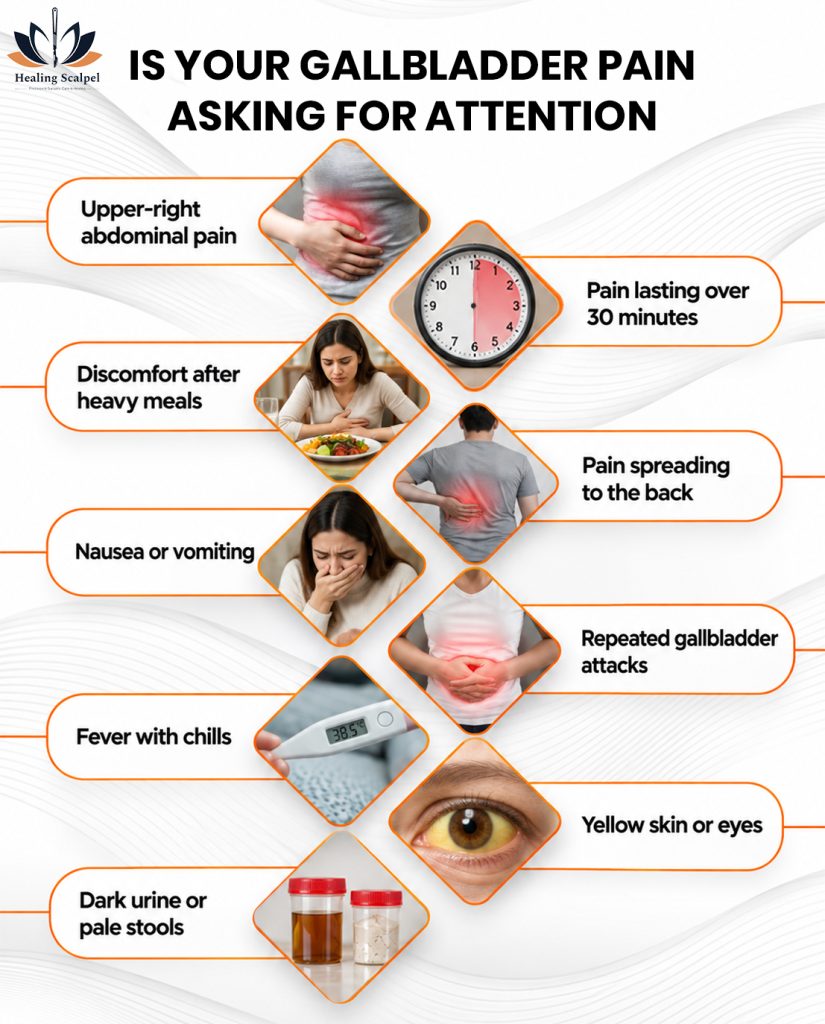
Common gallstone symptoms include:
- Sudden pain in the upper-right abdomen
- Pain in the upper-middle abdomen, below the breastbone
- Pain spreading to the right shoulder or between the shoulder blades
- Nausea or vomiting
- Abdominal discomfort after a heavy or high-fat meal
- Pain that lasts from more than 30 minutes to several hours
- Attacks that occur during the evening or at night
Gallstone pain is usually steady rather than a brief cramp. It may become intense quickly and then gradually settle when the stone moves away from the blocked duct. Since similar pain can occur with acidity, ulcers, pancreatitis, and other digestive conditions, symptoms alone cannot confirm gallstones. An examination and imaging are needed for an accurate diagnosis.
Are Gallstone Symptoms Different in Female Patients?
Gallstone symptoms in female patients are generally the same as those experienced by men. The key difference is the likelihood of developing gallstones, not the nature of the pain.
Women have a higher risk because oestrogen can increase cholesterol levels in bile, while progesterone may slow gallbladder emptying. Pregnancy, oral contraceptives and hormone therapy can therefore contribute to risk in some women. Symptoms during pregnancy should not be dismissed as ordinary nausea or indigestion, particularly when upper-right abdominal pain is persistent or recurrent.
The principal causes of gallstones involve changes in the composition or movement of bile:
- Excess cholesterol in bile: Cholesterol that cannot remain dissolved may form crystals and eventually stones.
- Excess bilirubin: Liver disease, biliary infections, and certain blood disorders can increase bilirubin and contribute to pigment stones.
- Incomplete gallbladder emptying: Bile can become concentrated when the gallbladder does not empty properly.
- Rapid weight loss: Losing weight too quickly can alter bile composition and reduce normal gallbladder movement.
- Metabolic factors: Obesity, diabetes and a sedentary lifestyle can increase risk.
- Dietary patterns: A diet high in fat or refined carbohydrates and low in fibre may contribute to gallstone formation.
- Family and age: A family history of gallstones and being over 40 can raise the likelihood.
When Should You Consult a Surgeon for Gallstones?
Arrange a surgical consultation if you have repeated episodes of upper-right abdominal pain, pain after meals, prolonged attacks, or gallstones that have already been identified on an ultrasound. Recurrent symptoms suggest that another blockage may occur, even if the pain settles between attacks.
Seek emergency medical attention if you experience:
- Severe abdominal pain that makes it difficult to sit still
- Pain lasting several hours
- High fever or chills
- Persistent vomiting
- Yellowing of the skin or eyes
- Dark or tea-coloured urine
- Pale stools
- Abdominal pain extending to the back with vomiting
These signs can indicate acute cholecystitis, an infected or inflamed gallbladder, a blocked common bile duct, cholangitis or gallstone pancreatitis. These conditions require prompt hospital assessment and can become serious if treatment is delayed.
What Is the Treatment and Cost of Gallbladder Stone Surgery?
Silent gallstones often require observation rather than immediate treatment. However, symptomatic stones, recurrent attacks, gallbladder inflammation, and common bile duct stones usually need active treatment.
The standard operation is a cholecystectomy, which removes the gallbladder rather than removing only the stones. Stones can form again if the gallbladder remains in place. A person can live normally without a gallbladder because bile continues to flow from the liver into the small intestine.
Laparoscopic cholecystectomy is performed through small incisions and is the usual surgical approach. Open surgery may be needed when there is severe inflammation, extensive scarring, unusual anatomy, or another clinical concern. A common bile duct stone may need ERCP before or around the time of surgery.
Indicative gallbladder treatment costs in India
| Treatment or procedure | Indicative cost | When it may be required |
| Laparoscopic cholecystectomy | ₹50,000 to ₹1,50,000 | Symptomatic or complicated gallbladder stones |
| Open cholecystectomy | Varies by hospital and complexity | Severe inflammation, scarring or conversion from laparoscopy |
| ERCP | Quoted separately by the hospital | Stone lodged in the common bile duct |
| CGHS laparoscopic package benchmark | Around ₹36,300 for eligible Tier 1, NABH care | Applies only under relevant CGHS rules and eligibility |
A major Indian hospital group publishes an average laparoscopic cholecystectomy range of ₹50,000 to ₹1,50,000. The final price can change according to hospital category, room selection, surgeon and anaesthesia fees, investigations, medicines, length of stay, insurance coverage, and whether ERCP or emergency care is required.
Take the Right Step Towards Lasting Gallbladder Relief
Gallstones do not always need surgery, but recurring pain should not be managed indefinitely as acidity or indigestion. Once attacks begin, a surgical assessment can clarify whether observation, additional testing, or gallbladder removal is appropriate.
If you experience repeated upper-right abdominal pain or have a confirmed gallstone diagnosis, consider visiting Dr. Digvijay Singh at Healing Scalpel, for a detailed evaluation and guidance on the most suitable treatment. Fever, jaundice, persistent vomiting, or severe continuous pain require urgent medical attention. Timely care can help prevent infection, pancreatitis, and bile duct complications.

Frequently Asked Questions
1. How do I know if my pain is caused by gallstones or gas?
Gallstone pain is usually intense, steady, and felt beneath the right ribs or in the upper-middle abdomen. Unlike gas, it may last from 30 minutes to several hours and spread to the back or right shoulder.
2. What are the first gallstone symptoms people usually notice?
The first gallstone symptoms often include upper-right abdominal pain after meals, nausea, vomiting, and pain between the shoulder blades. Some people have no symptoms until a stone blocks a bile duct.
3. Can gallstone pain go away without treatment?
A gallbladder attack may stop when the stone moves away from the blocked duct, but the stone remains present, and the pain may return. Repeated attacks should be assessed by a surgeon.
4. Are gallstones symptoms in female patients different?
Gallstones symptoms in female patients are generally the same as in men, but women have a higher risk due to factors such as pregnancy, oestrogen-containing medicines, obesity, and rapid weight loss.
5. What are the main causes of gallstones?
The primary causes of gallstones include excess cholesterol or bilirubin in bile and incomplete gallbladder emptying. Obesity, rapid weight loss, diabetes, pregnancy, age, and family history can increase the risk.
6. When does gallstone pain require emergency care?
Seek urgent medical care if the pain is severe or persistent, especially when accompanied by fever, chills, jaundice, repeated vomiting, dark urine, or pale stools. These symptoms may indicate infection or a blocked bile duct.